The 7th International Conference of Mycotoxicology and Food Security Convened in Hangzhou
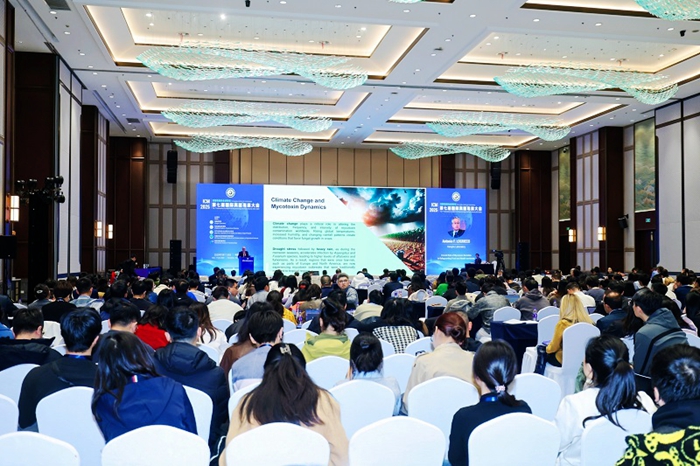
Hangzhou, Zhejiang, 17–20 November — The 7th International Conference of Mycotoxicology and Food Security was co-hosted in Hangzhou, Zhejiang Province, by Xianghu Laboratory, the Oil Crops Research Institute, Chinese Academy of Agricultural Sciences (OCRI-CAAS), and partner institutions. More than 600 delegates from 15 countries and regions, including representatives from the Food and Agriculture Organization of the United Nations (FAO) and the International Society for Mycotoxicology, gathered around the theme “Global Impact of Mycotoxins” to explore effective pathways for risk monitoring and green prevention and control of mycotoxins.
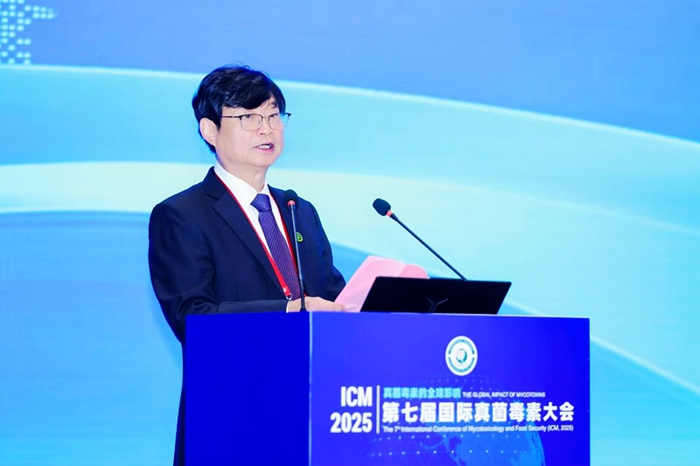
The conference was co-chaired by Academician and Professor Li Peiwu and Professor Antonio Francesco Logrieco, a leading scientist of the Biotoxins Team at Xianghu Laboratory and former President of the International Society for Mycotoxicology. Professor Li Peiwu presided over the opening ceremony.
Mycotoxins remain a major and persistent challenge. With climate warming, contamination risks have shown a tendency to intensify, posing serious threats to food safety and public health. It has been reported that around 25% of global grain production is affected by mycotoxin contamination each year; in China, the annual amount of grain affected exceeds 31 million tons. Centered on urgent needs in mycotoxin prevention and control, the conference featured in-depth exchanges on multi-omics risk monitoring, smart early warning, intelligent detection, and green source control, providing a high-level platform for academic dialogue and international cooperation and contributing to comprehensive global governance of mycotoxins and food safety.
During the conference, keynote presentations were delivered by experts including Professor Li Peiwu; Mr. Thaer Yaseen, an official from FAO’s Regional Office for the Near East and North Africa; Professor Antonio Moretti (National Research Council of Italy, CNR); Professor Sarah De Saeger (Ghent University, Belgium); Professor Shohei Sakuda (Tokyo University of Agriculture, Japan); Professor Amnart Poapolathep (Kasetsart University, Thailand); Professor Deng Yiqun (Guangdong Academy of Agricultural Sciences); Professor Wu Yongning (Chief Technical Officer, China National Center for Food Safety Risk Assessment); Professor Wu Aibo (Shanghai Institute of Nutrition and Health, Chinese Academy of Sciences); and Professor Wang Shihua (Fujian Agriculture and Forestry University). Presentations examined evolving trends of mycotoxins under climate change and impacts on global supply chains, along with response strategies.
In addition to the main plenary, the conference organized six parallel sessions on frontier topics, including “Biodiversity and Monitoring of Toxigenic Fungi,” “Mycotoxin Detection and Analysis,” and “Plant–Toxigenic Fungi Interactions and Regulation,” showcasing the latest advances, innovative approaches, and emerging trends in the field. An international preparatory meeting for establishing the Asian Society for Mycotoxicology was also convened.
Leaders and representatives from the Department of Food Safety Sampling and Monitoring, State Administration for Market Regulation (SAMR); the Department of Quality and Safety Supervision of Agricultural Products, Ministry of Agriculture and Rural Affairs (MARA); the China Rural Technology Development Centre; OCRI-CAAS; the Zhejiang Academy of Agricultural Sciences; Hubei University; and the Xiaoshan District People’s Government of Hangzhou attended and delivered remarks.