OCRI Identifies Key Drivers of Heat-Induced Damage in Plants
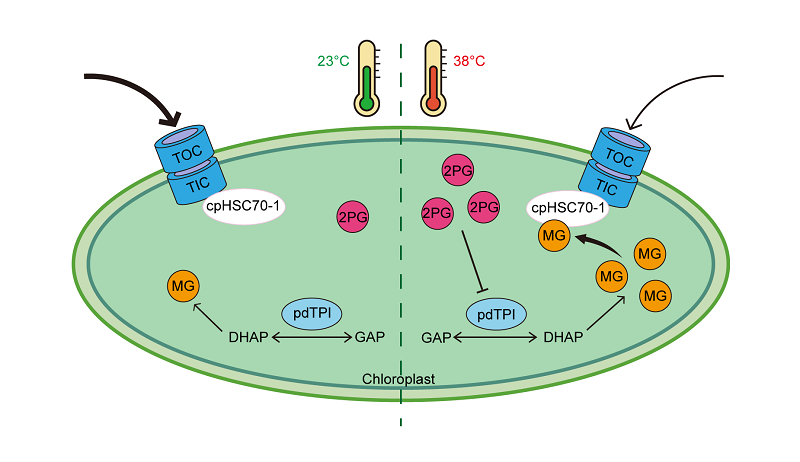
Recently, the Oil Crops Research Institute (OCRI), Chinese Academy of Agricultural Sciences (CAAS), identified photorespiration- and glycolysis-associated metabolites as key regulators of plant thermotolerance, providing new targets and theoretical support for improving heat tolerance in crops. The findings were published in the international academic journal Molecular Plant.
As global climate change intensifies, the increasing frequency of extreme heat events has made heat stress one of the major environmental factors limiting crop yield and quality worldwide. To address this challenge, the research team employed proteomics, physiological and biochemical analyses, and genetic functional validation in a multi-year study. For the first time, the researchers demonstrated that metabolites produced through the photorespiration and glycolysis pathways are the primary drivers of heat-induced damage in plants. They further revealed that these two metabolic pathways act synergistically in regulating plant thermotolerance. Based on the identified synergistic genes, the team developed plant lines with enhanced heat tolerance. The study elucidates the metabolic regulatory mechanisms underlying plant thermotolerance and provides important support for the discovery of stress-tolerant germplasm resources and molecular breeding of crops.
The research was supported by the Youth Innovation Program of the Chinese Academy of Agricultural Sciences, the Basic Science Research Center of the Agricultural Science and Technology Innovation Program, Chinese Academy of Agricultural Sciences (ASTIP), the National Natural Science Foundation of China (NSFC), and the Natural Science Foundation of Hubei Province.